Best Carburetors for 350 Small Block Performance and Reliability
The 350 small block Chevy is a popular engine choice for enthusiasts seeking solid power and straightforward maintenance. Choosing the right carburetor can improve throttle response, efficiency, and overall drivability. This guide highlights five well-regarded options and a related resource to help you compare designs, jetting, and installation considerations for 350 small block applications.
| Product | Brand | Key Benefit |
|---|---|---|
| Rebuild the Small-Block Chevy Videobook | Cartech | Comprehensive guide with color photos for rebuilding a small-block Chevy |
| Rochester 2GC Carburetor | Auto Parts Prodigy | Direct replacement for improved fuel delivery on SBC builds |
| VergasRetor 2 Barrel Carburetor | VergasRetor | Quality 2-barrel replacement with automatic choke for 350/400 engines |
| Rochester Quadrajet 4 Barrel Carburetor | SOASEMBE | Quadrajet 4-barrel for larger displacement SBC performance |
| TRX350 Carburetor for Honda Rancher | FanzKo | Multiple ATV compatibility; useful reference for carburetor sizing and install |
VergasRetor 2 Barrel Carburetor For Chevy 350/400
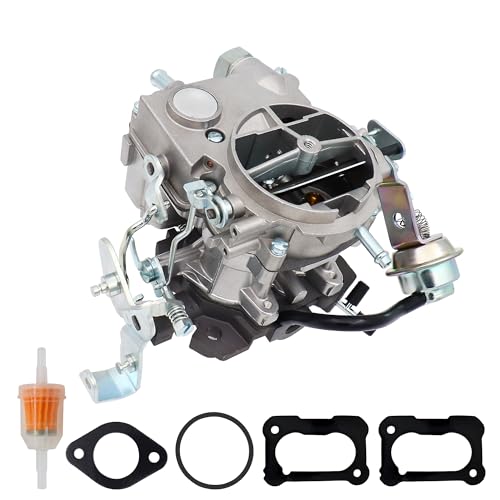
Product overview: A 2-barrel carburetor designed for Chevrolet small-block engines such as the 350 and 400. The unit emphasizes durability for daily driving and easy replacement of aging carburetors. It is marketed as a reliable upgrade for improved fuel delivery in classic SBC builds. The package includes the carburetor and basic components for installation. Jetting and exact fitment notes indicate compatibility with common small-block Chevy configurations from 1970–1980 and 1970–1975 for larger engines. Typical use cases include restoring stock performance or replacing a worn carb on a rebuild project.
Key features: Fits Chevrolet 350 and 400 engines, 2-barrel design, automatic choke variant, durable construction. Potential considerations include verifying base pattern compatibility with your intake and manifold, and ensuring matching linkage and throttle cable requirements for your specific year and model.
Rebuild the Small-Block Chevy Videobook

This book provides a detailed, step-by-step rebuild guide for the small-block Chevy, with more than 650 photos and a two-hour DVD. It’s designed to help enthusiasts understand engine teardown, inspection, parts selection, and reassembly, offering a practical companion to carburetor work as part of a full engine rebuild. While not a carburetor itself, it supports the overall process of optimizing the SBC for performance reliability and correct carburetor setup.
Key features: 160 pages, paperback, extensive color photos, included DVD, focused on the small-block Chevy rebuild process. Consider this guide as a foundational resource for diagnosing carburetor-related issues during a rebuild and for understanding how carburetor choice interacts with overall engine tuning.
Rochester 2GC Carburetor For Chevy SBC
The Rochester 2GC is a classic two-barrel design commonly found on 1960s and 1970s GM engines. This carburetor is known for its straightforward adjustment and reliable performance with appropriate tuning. The listed base size and jetting parameters can guide fitment with a 350 small-block when matching intake ports and linkage. Replacement is typically aimed at improving throttle response and mid-range power without radically altering displacement-driven power characteristics.
Key features: 2-barrel configuration, direct replacement for certain OEM setups, solid construction for SBC applications. Pros include simplicity and ease of tune; cons may involve older-style metering blocks that require careful calibration to modern fuel systems and emissions expectations.
Rochester Quadrajet 4 Barrel Carburetor

The Rochester Quadrajet 4-barrel carburetor is designed to provide a broader air and fuel delivery range, often resulting in improved peak power and off-idle response for SBC engines with higher displacement or performance goals. The Quadrajet 4MV model and its variants are noted for mechanical choke configurations and spread bore intake compatibility. This product targets enthusiasts seeking strong performance across a wide RPM range, including highway driving and moderate street performance applications.
Key features: 4-barrel design, spread bore, manual choke variant, suitable for 1966–1973 small-block Chevy engines in many configurations. Consider calibration for modern fuels and ensuring your intake manifold and air cleaner/interface match the carburetor’s bolt pattern and linkage requirements.
TRX350 Carburetor For Honda Rancher

While designed for a Honda Rancher ATV, this carburetor demonstrates common sizing and fitting considerations that can be informative for carb selection in small engines. The kit typically includes one carburetor, air filter, oil filter, and basic mounting hardware, illustrating how different manufacturers package complete replacement options. This can be useful for comparing throttle response, fuel metering, and air intake compatibility when evaluating carburetors for smaller-displacement or multi-application use cases.
Key features: 4-stroke ATV carburetor, includes air and oil filters, fiber and hardware components. Application notes emphasize cross-reference of inner and outer diameters to ensure correct fitment in non-SBC contexts, which can help when evaluating common carburetor dimensions for the 350 small block in custom builds.
Buying Guide: Key Purchase Considerations For 350 Small Block Carburetors
When selecting a carburetor for a 350 small block Chevy, start with engine goals: stock recuperation, daily driving, racing, or a blend of performance and economy. Consider the following:
- Engine compatibility: Confirm the carburetor base pattern, intake manifold compatibility, and throttle linkage with your specific 350 block year and modifications.
- Displacement and airflow: 2-barrel vs 4-barrel setups affect idle quality, throttle response, and peak power. Quadrajet schematics suit engines needing broad torque, while a well-tuned 2-barrel can deliver crisp mid-range power.
- Choke type: Automatic vs manual chokes influence cold-start behavior in varying climates. Ensure your build supports the chosen choke mechanism.
- Fuel system readiness: Modern fuels with ethanol may require metering adjustments, float level calibration, and accelerator pump tuning for optimal performance.
- Jetting and calibration: Availability of jets, metering rods, and springs impacts tuneability. Consider a carburetor with accessible tuning components or a rebuild guide for precise setup.
- Installation resources: Books like the rebuild guide can provide step-by-step procedures to help with disassembly, inspection, parts replacement, and reassembly critical to successful carb work.
- Budget and availability: Reputable brands with replacement parts and knowledge bases shorten setup time and ensure ongoing maintenance support.
In summary, the best choice depends on your goals. If you want broad torque across RPMs suitable for street driving, a quadrajet-style carburetor may be ideal. For simpler maintenance or classic-look restorations, a reliable 2-barrel Rochester unit can be a strong match. Always verify fitment against your intake manifold, carb mounting studs, and linkage before purchase.